July 25, 2021
How Air Quality Affects Health at a Local Level & What You Can Do About It
Learn more
.svg)

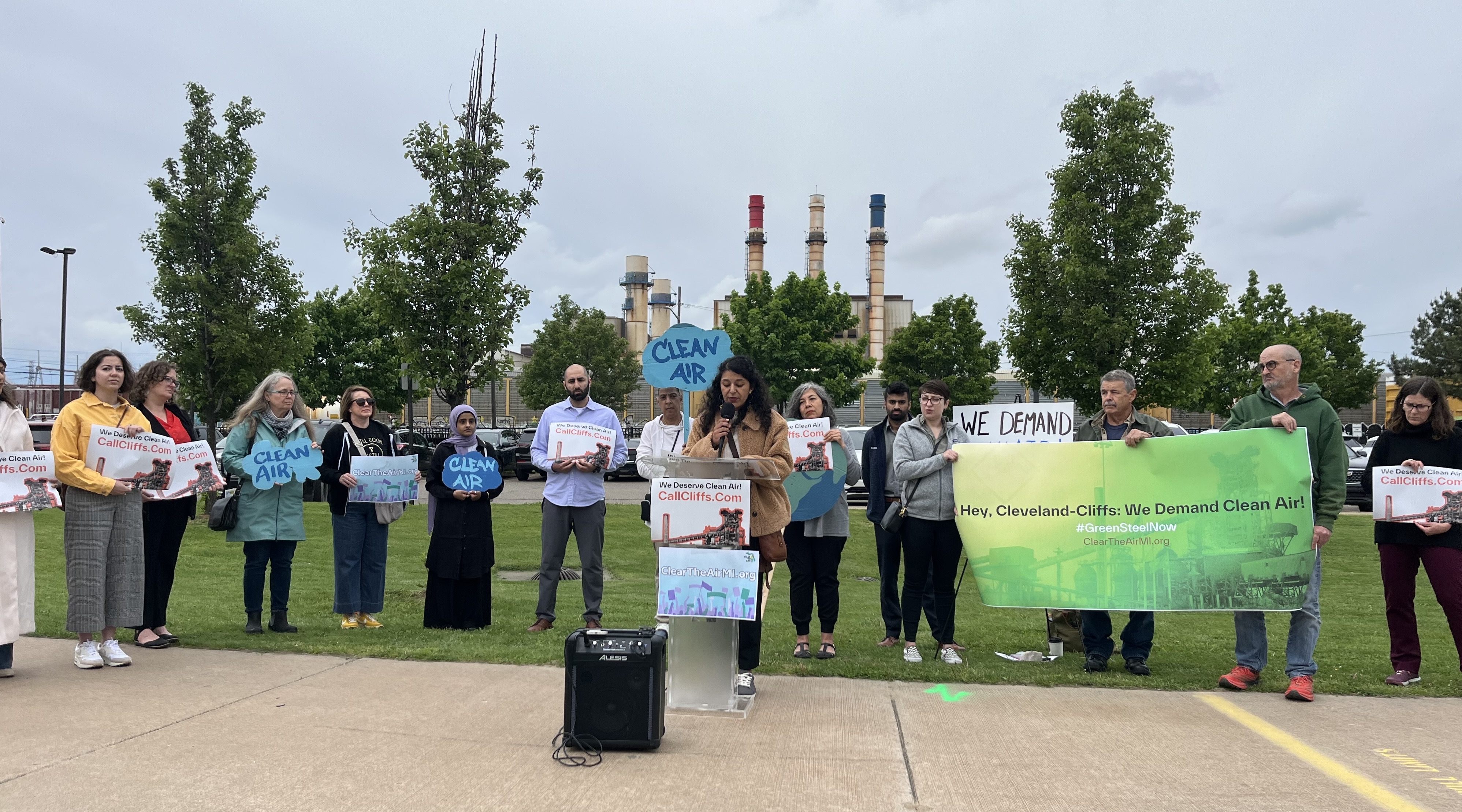
Deploying a network of community monitors isn't easy. Using the data for change can be even harder, and it can sometimes be long, lonely, and frustrating work. Through our workshops, we strive to help people learn something tangible, meet people in a similar position, and share resources, best practices, and ideas that can spark optimism, collaboration, and change.
At each of our workshops we asked people to share resources and case studies on how they're building their networks, building trust, selecting monitors, working with partners, and, of course, how they use data for change. Here's what air quality leaders have shared so far. As an editable Google Sheet, it's informal and scrappy, which is sometimes the simplest way to get information out there. Feel free to review, use, and add to this resource with resources you love, lessons that can make an impact, and wins you're excited to share.
At JustAir, our mission is to protect the 20,000 breaths we all take every day. We work with community, government, health, and agency partners to make community data more accurate, accessible, and actionable to drive locally-led change. But that's easier said than done.
Too often, leaders collect air quality data only to find out months later that it wasn't accurate. Maybe it wasn't colocated or corrected, maybe there were significant data gaps, or maybe there was an insect stuck in a sensor. This work can be frustrating, but our goal at JustAir is to streamline that process: giving teams tools to improve QA/QC, make their data publicly accessible, and turn it into something action-ready. JustAir can set partners up for change, but it’s the work on the ground that makes it happen.
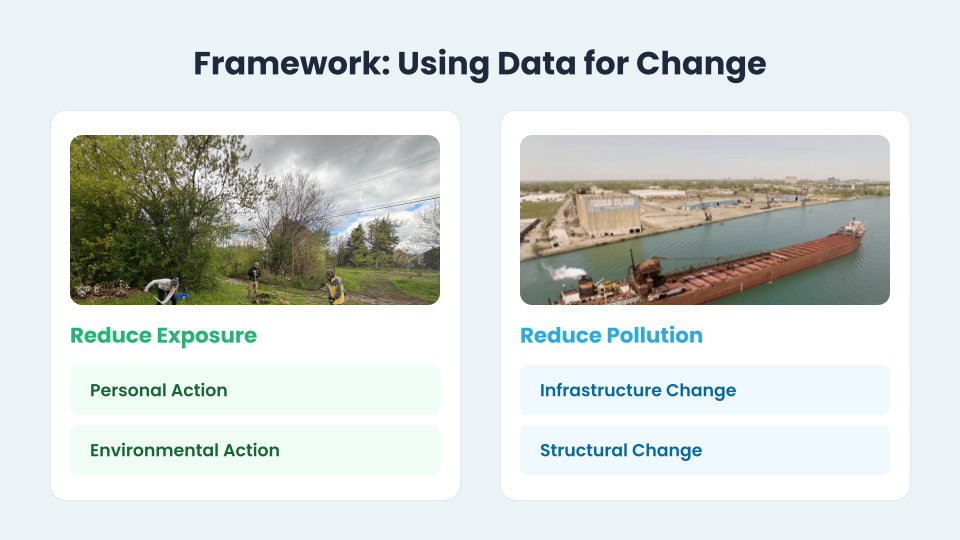
Over the past several years we’ve worked alongside dozens of community partners and we’ve seen how they’ve used data to make tangible change in their community. From this experience, we’ve identified two major categories for change:
1. Reducing exposure to pollution by helping people stay safe from the pollution that exists in their communities. This includes using data for both personal and environmental action.
2. Reducing pollution by tackling pollution at its source. This includes using data for infrastructure and policy change.
Here's what this looks like in practice, with real case studies, stories, and lessons from air quality partners across the country.
Personal action is about giving people the data they need to make decisions for themselves and their families. This could be keeping an asthmatic kid home from soccer practice on a bad-air day, turning on an air purifier in the bedroom, or choosing not to go for an outdoor run.
To spark personal action, air quality data has to be clear, accessible, and informative - but not overly technical or overloaded with information. The Air Quality Index (AQI) was designed by the EPA to quickly give the public information on what's considered safe or not - green is good and red is bad. Although AQI doesn’t always tell the whole air quality story, generally speaking, it’s a quick and effective way to help people stay informed and make personal decisions about their health and safety.
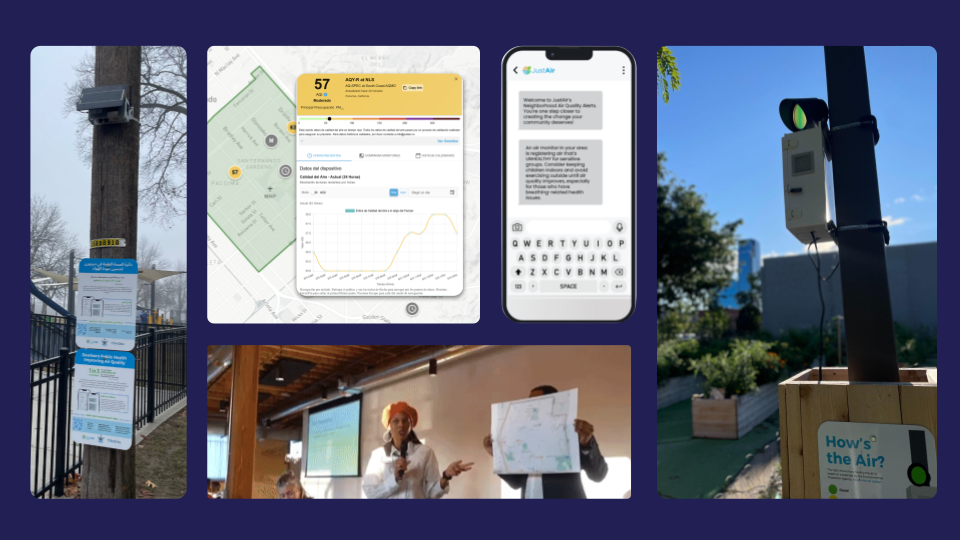
To do this well, communities can focus on both technical tools and in-person interactions. On the JustAir public dashboard, for example, AQI colors are prioritized on maps and device cards. Making data truly accessible means that our public dashboard can be translated into different languages and follows the Web Content Accessibility Guidelines (WCAG), including a modified AQI color palette for users with color vision deficiencies. Residents can also sign up for air quality text or email alerts for monitors near their home, child's school, or park, to be alerted immediately when air quality goes from Moderate to Unhealthy for Sensitive Groups, for example. This type of access empowers people to stay informed and take personal action.
But technology isn't the only solution. There are so many ways to make air quality information accessible: installing signs on poles near outdoor monitors, creating public art to draw attention to air quality issues, tabling at community events, or hosting air quality workshops that ensure residents are informed and engaged.
This is the access that helps residents and families protect themselves from poor air. Residents know the information is out there, can access it easily, understand what it means, and they know how to stay safe. Every engagement with public data is with a real person with a real, sometimes difficult, personal story.
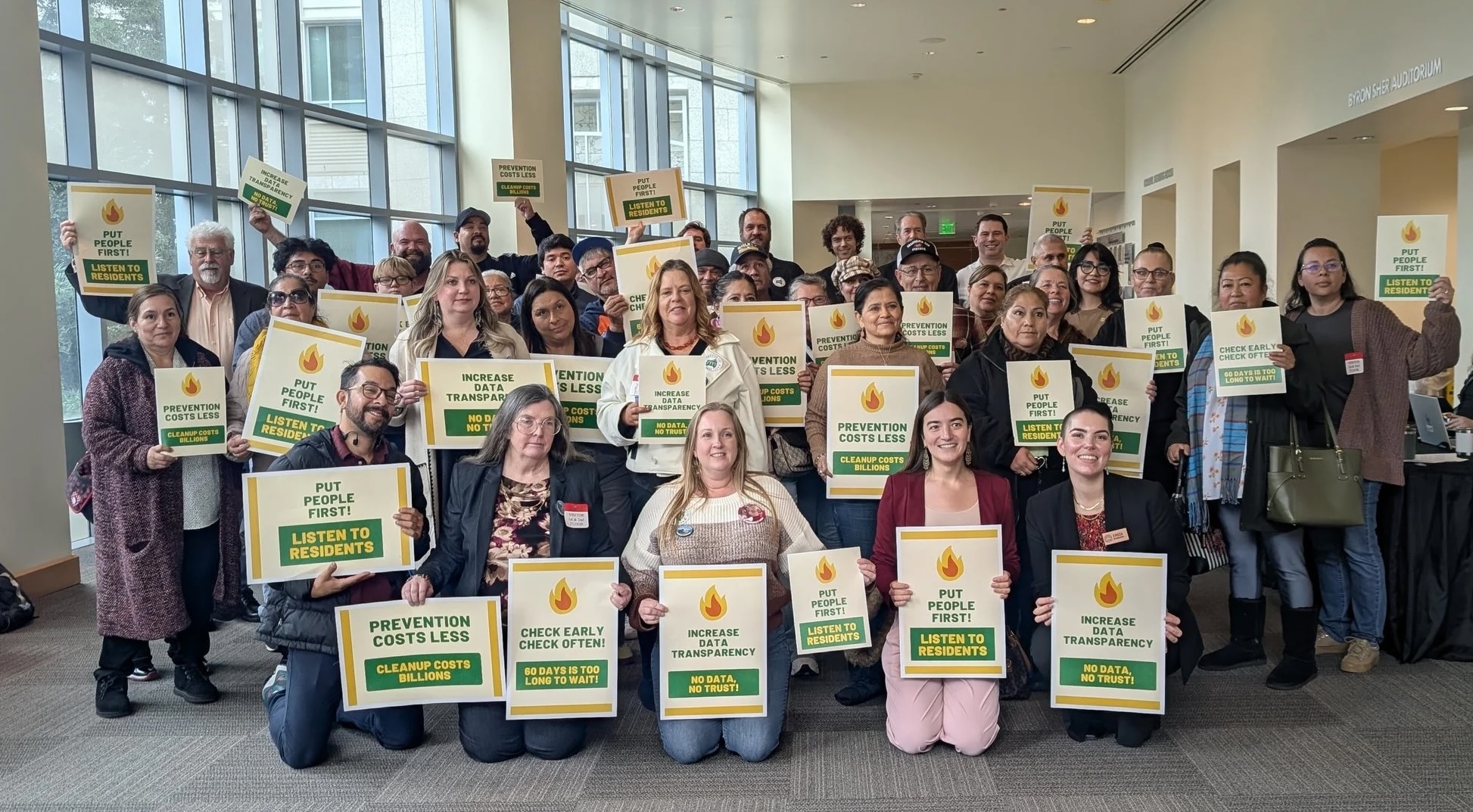
Jennifer Elkins is a mother and community organizer. She's president of the Val Verde Civic Association in LA County, California, and works with several organizations fighting for cleaner air, like Citizens for Chiquita Canyon Closure and Grassroots Organizers for Accountable Landfills.
Jennifer's neighborhood sits near the Chiquita Canyon Landfill, a known source of heavy pollution linked to asthma, heart disease, cancer, and other serious health harms. Jennifer and her neighbors installed low-cost air quality monitors and check the data daily to keep themselves and their families safe. Jennifer uses the data to decide if she should open her windows, send her kids outside to play, or spend time outside with her family. Too often, the answer is no - but she has the data to help her make these informed decisions and to advocate for other, more sustainable types of change.
The second way to reduce exposure is by taking environmental action: building green buffers between busy roads and neighborhoods, upgrading HVAC systems in schools near industrial facilities, and even hosting DIY indoor air filter workshops so residents can build their own to keep at home.
For environmental action, long-term data can be an effective way to both make the case and build support for environmental change. Networks striving for environmental change can use baseline versus pollution-source data, or pre- and post-intervention data that shows the impact of environmental improvements and build a case for doing more. Funding for environmental change often comes from one-time grants, since most of the investment happens upfront with significantly smaller budgets for ongoing maintenance.
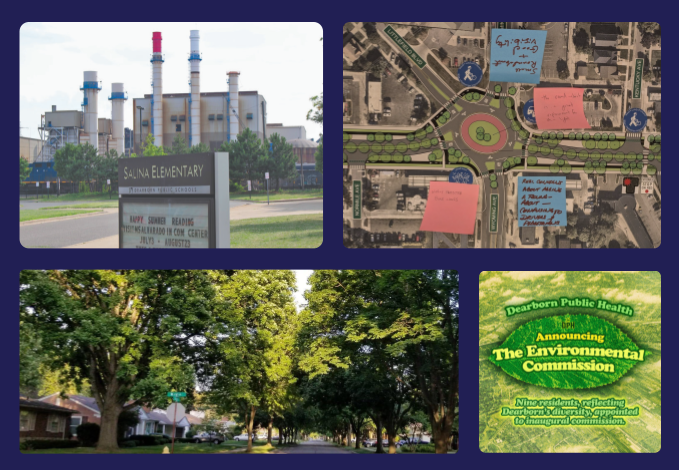
Dearborn, Michigan is a diverse community located just outside of Detroit and struggles with neighborhoods and schools sitting right next to industrial facilities, especially in the community's South End. In 2023, Dearborn launched a community air quality network with JustAir and leaders are using air quality data to spark change across the community - from sending text alerts when air is poor, to posting signage at their monitors, to winning lawsuits, to implementing environmental change.
Last year, Dearborn Public Health launched the community's first Environmental Commission to help inform environmental action at the city level. The city is updating its strategic plan, and leaders are focused on reducing pollution exposure through green infrastructure and environmental action. Hayat Hachem, a Data Analyst with the City of Dearborn, supports the community air network and said the city is using data to increase tree coverage, improve roadways that allow for and encourage biking and walking, and work with community partners to build green buffer zones that protect children and families from nearby pollution. The City of Dearborn is a clear model for what it looks like to take environmental change seriously as a long-term, city-wide strategy.
Infrastructure change is where this work shifts from protecting people from pollution to actually reducing it. Infrastructure change means using data to identify a specific source and making a technical or infrastructure change to stop or reduce pollution.
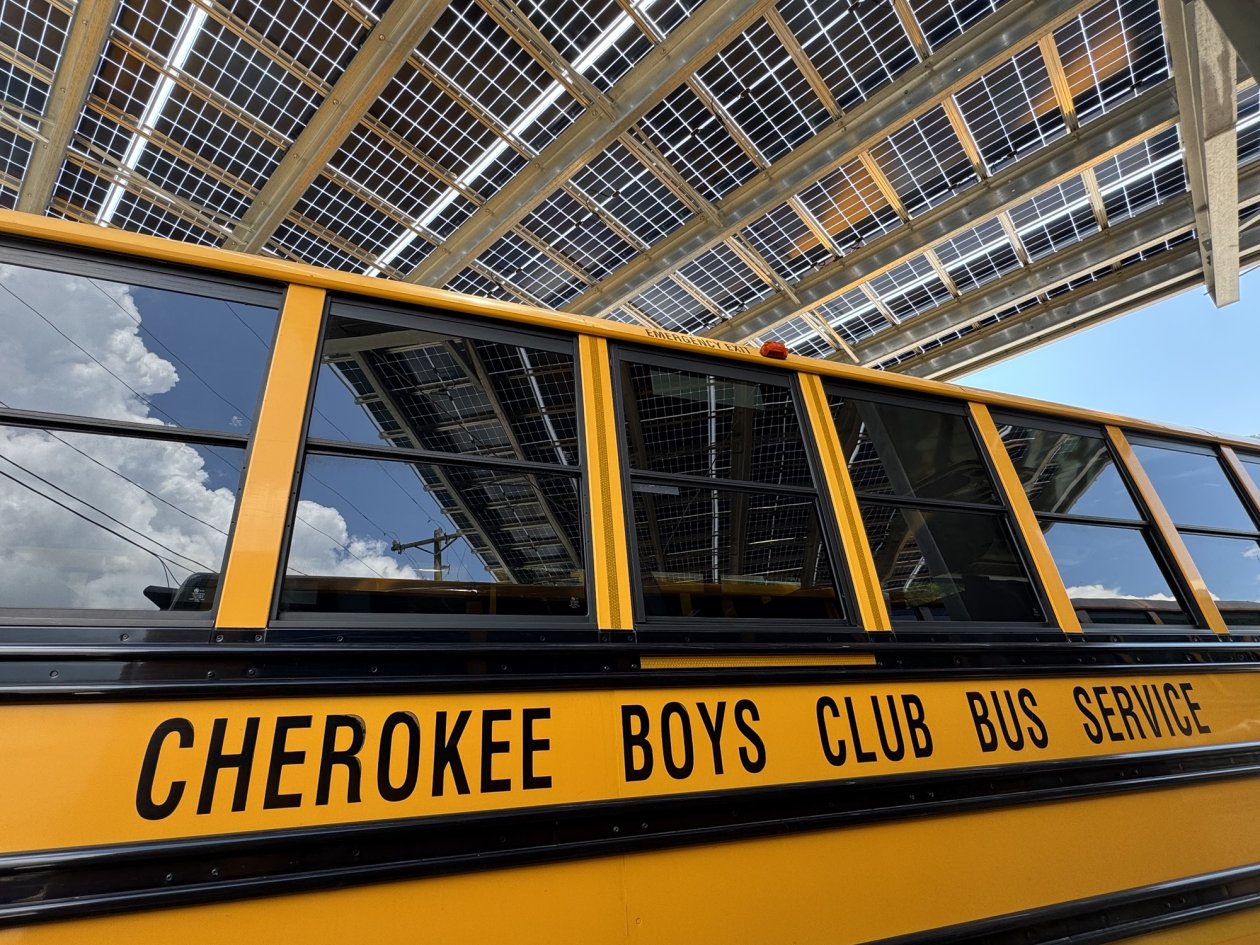
Partners like the Eastern Band of Cherokee Indians use air quality and health data to justify and raise money to electrify their school bus fleet. Swapping diesel for electric can make a measurable difference for kids with asthma getting on and off buses every day. The Detroit/Wayne County Port Authority is Green Marine Certified and working to identify areas for needed facility and equipment improvements at nearby ports - whether that's encouraging terminals to cover piles, spray dust more frequently, repave areas with heavy truck traffic to reduce keep fugitive dust, or invest in battery-powered small machinery to reduce diesel emissions to meet decarbonization goals.
Data needs for infrastructure change are similar to what's most effective for environmental action: baseline vs. pollution-source data, long-term collection, and integrating external data sets like wind or health data to better identify pollution sources and their impact on people. Also like environmental action, one-time funding sources or grants can be used well for infrastructure change. Everything takes ongoing maintenance, but the bulk of the cost is often a large sum upfront.
Katherine Blauvelt is Full Circle Future's Executive Director, working with partners across the country to reduce pollution by addressing organic waste and landfills. Full Circle Future recently worked with partners in the Northeastern U.S. who are using monitors to track pollution at a landfill. A few months ago, a methane emissions spike was detected at a monitor and the landfill started receiving odor complaints from the surrounding community. Using real-time data, operators quickly identified two areas requiring investigation, letting staff narrow the problem instead of searching the entire site manually. The investigation revealed a torn plastic cover liner that was allowing gas to escape. Once repaired, both the odor complaints and elevated emissions were resolved.
A torn liner is a low-cost fix and an effective way to reduce pollution at its source. Without data, the search for the issue could have gone on for months, causing anger, frustration, and potential health impacts for residents in the surrounding community.
The last category is often both the slowest to move but the most durable. Policy change is changing the laws, regulations, permitting rules, and enforcement that govern pollution sources and keep pollution in check.
There are countless examples of local governments implementing truck-route improvements, fugitive dust ordinances, and anti-idling laws. Communities have implemented new zoning requirements that keep industrial uses away from homes and require environmental justice reviews in air permitting. Cumulative impact laws, which a handful of states have now passed, require regulators to consider the total pollution burden on a community, not just one source at a time. These changes can stop pollution from ever existing to keep communities safe.
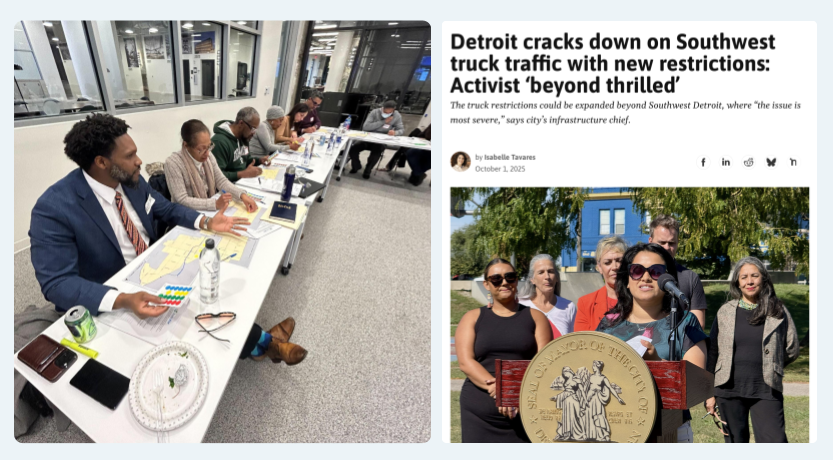
Policy change happens with long-term, high-quality, hyperlocal, publicly accessible data. This is data you can put in front of a public hearing, a city council, or a permitting board with confidence and evidence. But policy change needs much more than data - long-term change needs residents' voices, community organizing, public accountability, and strong, strategic partnerships to review data and hold stakeholders accountable.
Tad Aburn is the retired director of the State of Maryland's Air Pollution Program and now volunteers with EJ communities across the state. Through strategic partnerships with community leaders, university researchers, and the Maryland Department of the Environment (MDE), Cheverly, MD has built a network of about 30 air quality monitors across its community.
From Tad’s perspective, the best way to implement change is actually to just enforce the laws already on the books. For example, Maryland already has an anti-idling ordinance, so the MDE is working with State Police to conduct focused enforcement to ensure illegal truck idling isn't taking place. MDE also expanded its inspection program for stationary sources with targeted inspections that prioritize sources with suspected higher emissions based on air community air quality data, wind, and industrial sources. These interventions take high-quality data and strong community-government partnerships, but policy change is more than possible - it’s happening in communities every day.
This work is difficult but it’s also possible. This article's intent is to spark a little inspiration, optimism and hope and to help you get started. Ethan McMahon of EM Environmental Solutions also built this worksheet to help communities think through the type of change they want to create and what it might take to get there!
If you want to chat about making change in your community, reach out. Take a look at the resources leaders in your nation-wide network have shared to help make this work easier - and be sure to add your own wins, resources and best practices for others to learn from.
There’s a quote I love from Michelle Obama’s speech during the opening of the Obama Presidential Center this past June: "Hope is the essential spark that lights the fire of change.”
All of this work starts with starts with hope. That's how we create positive, lasting change.

Sign up for our newsletter to get all the Just Air updates, information, and news.
