July 25, 2021
How Air Quality Affects Health at a Local Level & What You Can Do About It
Learn more


On the evening of July 15, Darren Riley stood on the roof of JustAir’s office building in Detroit and couldn’t see the bridge to Canada, about a mile and a half away, because the sky was thick with smoke. His phone’s weather app said the AQI was 70, Moderate, “similar to yesterday.”
His weather app's forecast model leans on historical trends and on satellite data, which struggles to measure smoke after dark. The model often breaks down during wildfire smoke events when conditions change faster than the forecast can follow. Anyone looking outside that night could tell the air was far worse than Moderate, but the forecast hadn’t caught up yet.
The smoke reached far beyond Detroit. From July 15 - 17, fires in Canada sent smoke over much of the Midwest and Eastern United States, and tens of millions of people breathed unhealthy air. ITt wasn’t a one-off event: the average American breathed four times more wildfire smoke each year from 2020 to 2025 than from 2006 to 2019.
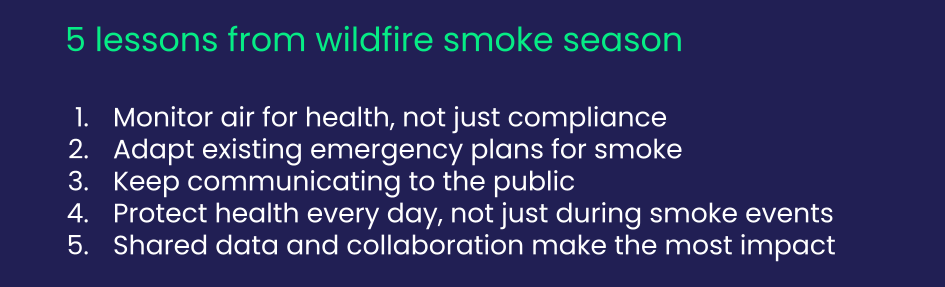
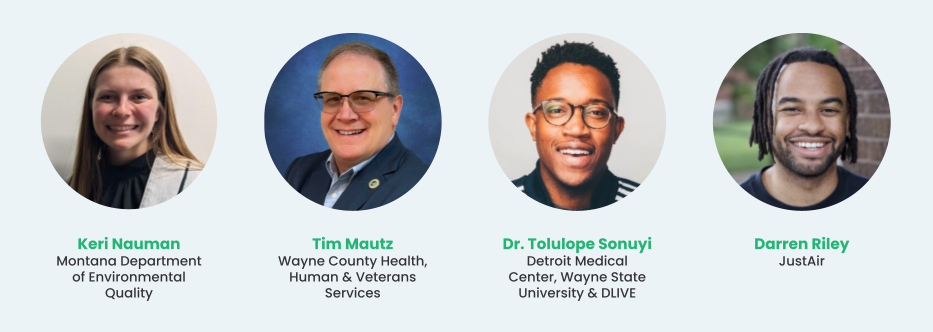
About once a quarter, JustAir hosts a virtual workshop where people working on air quality across the country - from air agencies and health departments to community groups - learn from each other and leave with something they can use, like our public, shared resource doc. Our October workshop was about wildfire smoke.
Many of the places now dealing with smoke have limited systems for getting information and resources to residents. To look back on the summer, we brought in leaders to share what they experienced and learned this smoke season.
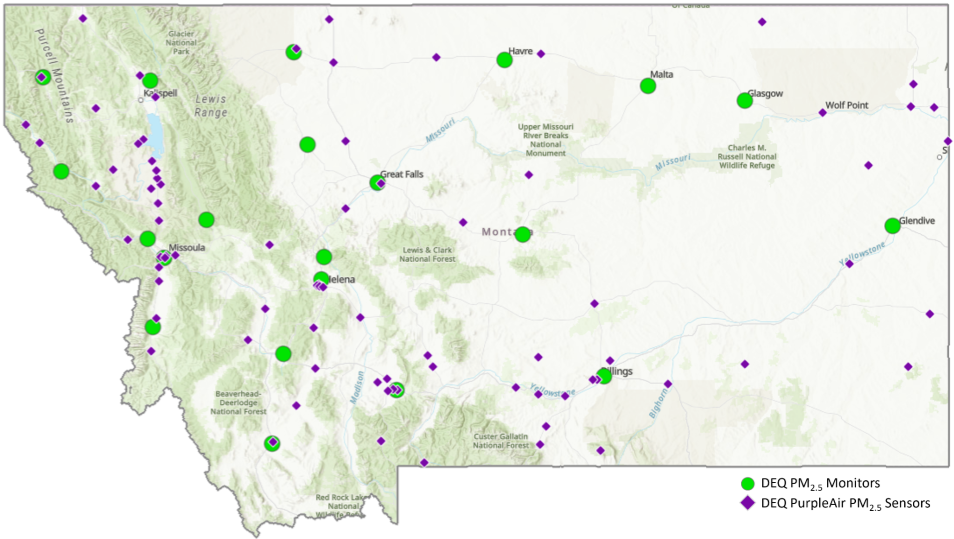
Like most state air agencies, the Montana Department of Environmental Quality (DEQ) has historically focused on Clean Air Act compliance: running regulatory monitors and making sure the state meets federal standards for PM2.5 and ozone. But the DEQ operates just 26 regulatory monitors across the fourth-largest state in the country, so plenty of small towns had no localized air quality information.
Between 2006 and 2018, Montana had the highest share of deaths linked to wildfire smoke in the country. To address this challenge, the DEQ realized the importance of moving beyond compliance and focus on health.
The DEQ started building a community monitoring network to fill in gaps regulatory monitors couldn’t reach. The state’s PurpleAirs in Schools Project, which puts an indoor and an outdoor sensor at high schools across the state, currently serves about 100 of Montana’s 182 high schools and plans to expand to more.
“Instead of people being scared, we want to give people technology and access to data so that they can make informed decisions and that they can protect and advocate for themselves,” Air Research and Monitoring Supervisor Keri Nauman said.
For an agency built around compliance, this is an important shift: Monitors aren't just there to check against federal standards, they’re also there to help people make important, localized health and safety decisions. Read more about Montana’s program in the American Lung Association’s Something in the Air report.
Unlike Montana, Michigan isn’t used to extreme wildfire smoke events. Before this summer, Wayne County Department of Health, Human and Veterans Services’ plan for poor air quality didn’t go much past public education. When smoke hit Unhealthy, Very Unhealthy, and even Hazardous levels this July, the County realized messaging alone wasn’t enough.
Chief of Public Health Preparedness and Response Tim Mautz knew that the County’s Homeland Security & Emergency Management department had a warehouse of KN95 masks left over from COVID. Working with several other County departments, Mautz’s team identified nearly 150 senior centers, assisted living facilities, and senior housing sites to receive them. Within a few hours of someone first raising the idea, employee volunteers had delivered more than 70,000 masks, with an educational flyer in every delivery.
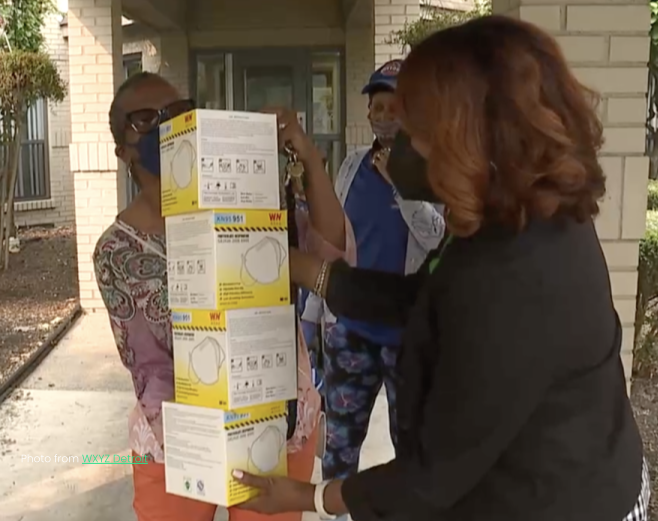
The County could move that fast because it didn’t build anything new. It built on existing plans to deliver supplies to people who needed them most. “Instead of delivering Cipro and Doxy for an anthrax event, we just switched out and were delivering masks instead,” Mautz said.
See news coverage of the County’s distribution effort here.
Emergency Medicine Physician Dr. Tolulope Sonuyi, worked in the emergency department of the Detroit Medical Center a few days after the area’s smoke was at its worst. He expected a rush of patients struggling to breathe. “When I went in there, it was actually paradoxically quite quiet,” he said. He can’t say for sure why, but he believes people got the warning. The smoke had been forecast days ahead, it was all over the news, and people could see and smell how thick it was was so many stayed inside.
That warning should come from multiple directions to reach the most people. Montana and Wayne County both have public air quality dashboards and agencies issued emergency alerts. People got the message: Between July 15 and 20, JustAir’s public dashboard reached over 20,000 views and more than 900 users signed up for alerts.
But telling people the air is bad isn’t enough, they need to know what to do about it. Montana DEQ publishes activity recommendations that schools use to decide whether to cancel outdoor activities. Wayne County uses JustAir to send text and email alerts with recommended actions based on EPA guidance. For seniors, who may be less likely to check a dashboard or get an alert, the County printed flyers and delivered them with every box of masks.
Communication works by meeting people where they are and using local data they trust.
People are often aware that wildfire smoke is coming but the pollution people live with every day is often invisible and underreported.
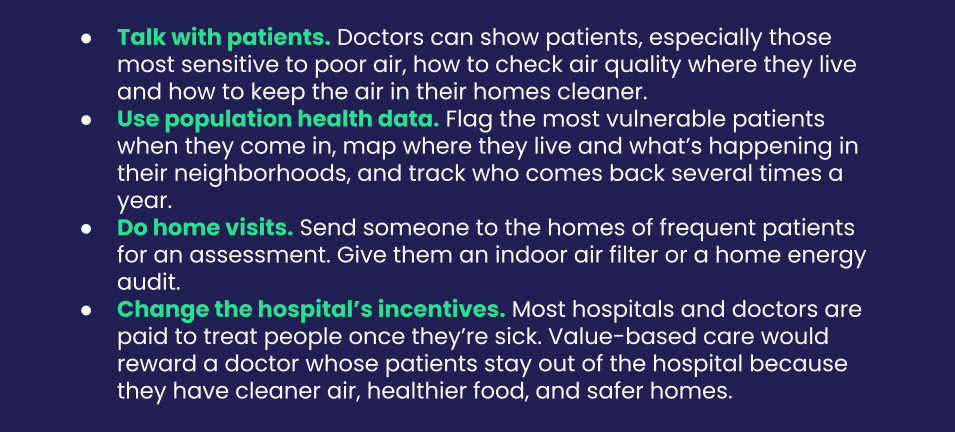
That’s what worries Dr. Sonuyi most. In the emergency department, he sees a second grader with asthma coming back two or three times a month and a woman in her third trimester struggling to breathe. He and his colleagues have seen young people die of asthma before they turn 20. Too few patients and providers connect the symptoms to the air where they live.
“Asthma’s coming in all the time. COPD is coming in all the time,” he said. “We’re not connecting the dots.”
Dr. Sonuyi sees four ways health systems can start connecting the dots:
Smoke doesn’t stop at city or county lines, and no single network can see all of it. But when data from satellites, reference monitors, community sensors, wind and weather conditions are all in one place, better outcomes are possible.
JustAir has spent the last several months testing a forecast tool that does just that, which is expected to be available to partners in early 2027. With this much local data, leaders can more accurately track air quality events of all types and keep people safe during smoke events.
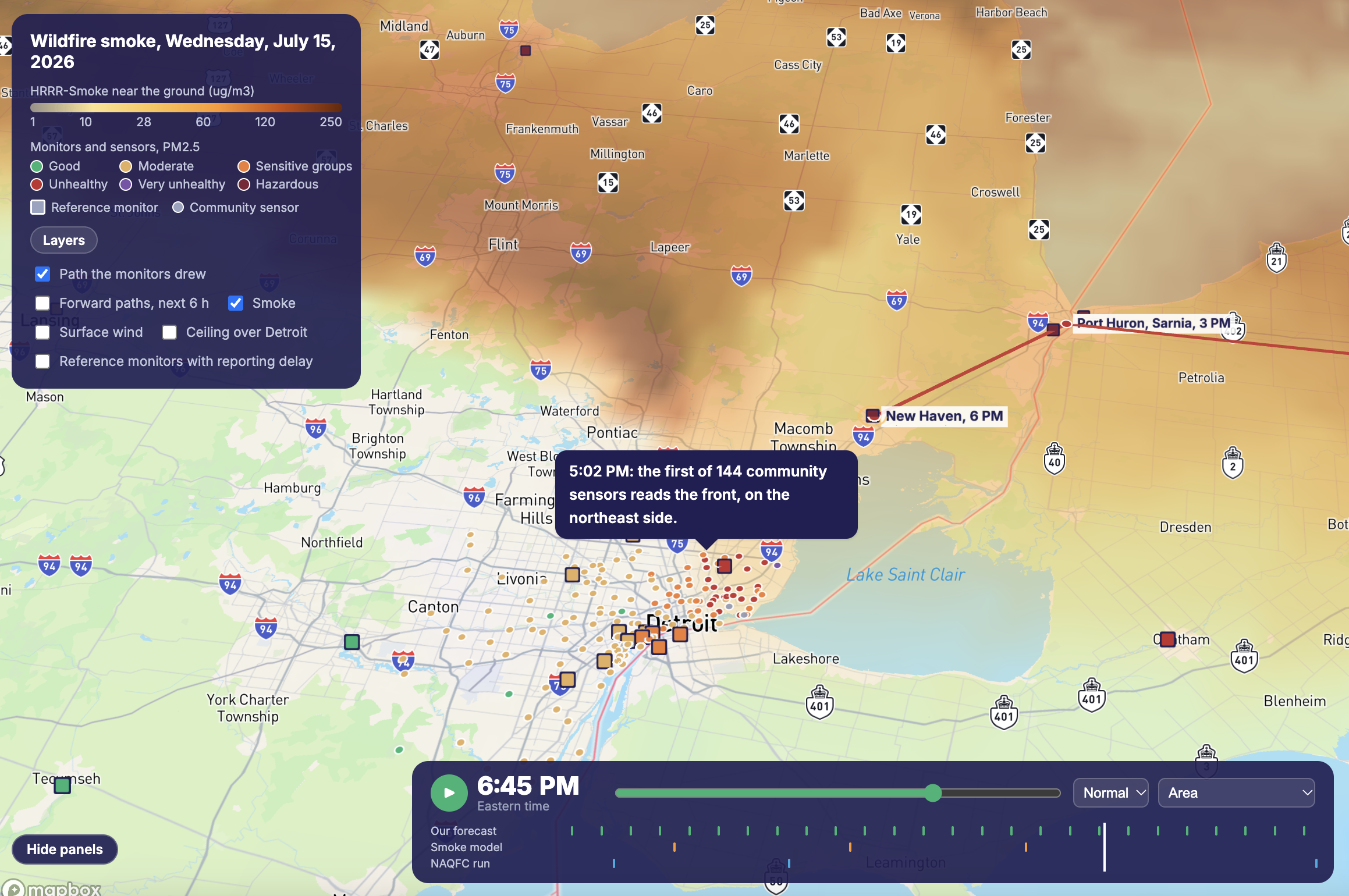
Riley compares what he saw on JustAir's forecast tool during the wildfire events to a stadium wave: when smoke hit monitors in New York’s Hudson Valley, the readings showed it heading toward Harlem. In Wayne County, the State’s forecast projected the smoke would move south toward Windsor, but the tool showed it moving west in real-time. In both cases, the communities downwind could have been warned earlier.
High-quality local data does the most good when it’s shared. Regions and states should be looking at how to make their data go further: connecting with neighboring networks, agreeing on quality standards, and building forecasts and communication systems across entire communities. Wildfire smoke will be back and when it comes, everyone should be able to get both real-time and forecasted data that's true to lived experience - on the worst smoke days and every day.
We’re excited to work with agencies, health departments, community networks, and researchers to refine real-time forecasting methods before next smoke season so regions can respond to together.
--
What lessons did you learn this smoke season? Use our Smoke Season Retro & Planning Worksheet to look back and help plan for the future. And if you’ve built something that works, whether it’s a guide, a flyer, an alert, or a data win, add it to our shared resource list so other communities can use it too.
Want to keep the conversation going? Join our Third Thursdays Office Hours or reach out to find some time to chat. More workshops are coming next year - let us know what you’d like to discuss!

Sign up for our newsletter to get all the Just Air updates, information, and news.
